

Grosvenor House Group Statement 2025
Anti-Slavery & Human Trafficking Statement
Introduction
This statement is made pursuant to section 54(1) of the Modern Slavery Act 2015 on behalf of Adaston, Grosvenor Facilities Management (GFM) Limited and Synergize Ltd operating under the consolidated group of Grosvenor House Group (GHG) as the parent company.
This statement provides an overview of internal policies and due diligence processes relating to the risk of modern slavery in the UK. It also provides an overview of the work the Group have done in the financial year ending 31 May 2025 to minimise the risk of labour exploitation and human trafficking occurring in its businesses or supply chains. This modern slavery statement has been approved by the Board of GHG and Adaston.
Our Business
The Group is a privately owned business providing facilities management, passive fire protection, construction and energy saving solutions to a wide range of clients across the UK. We have over 600 employees across the UK with an annual turnover of £75m and a registered head office in Harrogate, North Yorkshire.
We are committed to acting ethically and with integrity in all our business relationships. As such, we recognise our responsibility to manage our businesses and supply chains to identify and alleviate any potential or actual human rights violations. We are committed to continually improving our practices to combat slavery and human trafficking and to encourage the same high standards from our supply chain and other business partners.
Our Value Chain
The majority of revenue earned by our business is through specialised service provision carried out by full-time employees of GHG. In providing these services, we maintain ongoing relationships with over 750 suppliers.
We believe our highest areas of potential risk are within our supply chain and in the use of subcontracted labour. In order to mitigate our supply chain risk and as part of their contractual relationship with us, we require suppliers in the UK to confirm that they will comply with our Supplier Code of Conduct and always pass through our approved contractor requirements.
Identifying Modern Slavery Risks
We mandate the highest employment standards in all our operations, as outlined in the Code of Conduct. As part of our ongoing due diligence, all our suppliers are robustly checked during the onboarding process and before being commissioned for any work. We check whether they have a modern slavery policy and whistleblowing systems in place, irrespective of turnover.
The Group’s Risk Committee have concluded that whilst the risk of modern slavery occurring in our immediate lines of business is low, there is always a risk of modern slavery occurring in areas of our operation where we have less visibility over second-tier suppliers or where suppliers are dependent on subcontractors. In order to address this risk, the Group has made it a formal requirement for all suppliers to declare the use of any subcontractors employed in the delivery of services to us and we will not accept the use of subcontractors beneath the second tier of supply.
Of the more than 750 suppliers we currently procure products and services from, 361 are preferred first tier suppliers whom we consider to be material to our business and who may, in-turn, have direct workers and sub-contractors employed on both a permanent and temporary basis. In order to assess the level of risk to which we might be exposed, between 2023 and 2025 we carried out 15 on-site risk assessments of preferred suppliers across key sectors such as a) building and construction; b) electrical and plumbing; c) facilities management, and d) manufacturing.
Our findings suggest that, across these sectors, the greatest risk lies with companies who rely primarily on subcontractors and sole traders to deliver their services. Independent and subcontracted workers may be more exposed to forced labour, underpayment, or poor working conditions, especially if their employment status is unclear or poorly regulated. A shortage of skilled labour in certain sectors such as construction has led to fragmentation of the sector, as well as the presence of numerous small operators and an increased risk of gangmasters. This makes it difficult for our site managers to effectively monitor labour practices and increases the risk of labour exploitation. Added to this, we have found poor contractual clarity under IR35 and sole trading relationships. Poorly managed contractual arrangements can obscure worker rights and the competitive nature of bidding can incentivize cutting corners, which might include ignoring labour standards and tolerating exploitative practices.
Addressing these risks requires vigilant supply chain management, clear contractual standards, effective monitoring, and strong enforcement of labour laws to ensure all workers are protected from modern slavery in the industry.
Our Policies in relation to Modern Slavery
The Group and Adaston are committed to acting in accordance with the law. Our companies and employees operate under a number of policies designed to ensure a high standard of social governance and ethical compliance, of which the cornerstone is the Supplier Code of Conduct. All policies are available internally and key policies are placed on our website.
Supplier Code of Conduct
Our Supplier Code of Conduct reflects our commitment to acting ethically and with integrity in all our business relationships. It is a fundamental commitment to comply with all applicable legal requirements and with high ethical standards. The code outlines responsibilities to colleagues, customers and to the Group. The Supplier Code of Conduct highlights these commitments and sets out how we will work with our suppliers to address potential areas of risk. If a problem is identified, we will work together with the supplier to address any areas of concern. Where we are unable to satisfactorily resolve the issue, we may terminate our use of them as a supplier/contractor.
Policies
In addition to the Supplier Code of Conduct, the Group maintains policies on customers and suppliers, human rights and the rights of employees. Specific policies applicable to modern slavery include:
- Modern slavery and human trafficking policy
- Recruitment and vetting procedure
- Whistleblowing policy and procedure
- Working time regulations policy
- Bullying and harassment policy
- Bribery policy
Key Performance Indicators (KPIs)
We have worked with external modern slavery experts to review our existing systems, benchmark our level of compliance and advise on enhanced systems, due diligence and management KPIs. Since 2019, the Group has used KPIs to measure our effectiveness at dealing with modern slavery. We have had:
- One incidence of modern slavery risks involving potential gangmasters on one site.
- 80% of senior management staff trained on identifying and remediating on labour and human rights risks.
- 60% of relevant Group employees trained on preventing modern slavery and trafficking.
- 7% of our first tier suppliers (25 out of 361) subjected to a modern slavery risk assessment.
Appropriate targets for the KPI’s are reviewed and agreed annually.
Enhancing Supplier Adherence
To ensure all those in our supply chain comply with our values, over the next year we will be putting into place additional measures to ensure compliance with our Modern Slavery programme. This will include carrying out an initial mapping exercise of our supply chains and continuous monitoring of suppliers’ performance on labour and human rights, ensuring traceability in supply chains and working with our suppliers when modern slavery risks are identified.
Our Work to Date
Since 2018, the Group has been working with labour and human rights experts to carry out research into the modern slavery risks across its supply chains to enable it to develop its due diligence processes. This has been mainly desk-based research looking at the risks of modern slavery in key sectors and gathering intelligence through direct interviews with suppliers across the UK. In order to obtain a clearer picture of how these risks were being managed in 2018, a total of 11 supplier interviews took place to check management practices, policies and procedures. This helped GHG to identify improvements in its due diligence during supplier tendering and onboarding processes. There are now clauses covering modern slavery in the Group’s standard conditions of purchase.
To ensure a high level of understanding of the risks of modern slavery and human trafficking in our supply chains and our business, in 2018 the Group delivered modern slavery training to over 80 directors, managers and company employees. Further direct training was provided to our Board of Directors in 2019 and 2023 covering:
- Modern slavery in construction and facilities management in the UK, who is at risk and how. Hotspot and high risk areas identified in supply chains risk assessments and recommendations on how to manage these risks.
- Key questions to help procurement and technical teams identify potential issues with suppliers against provisions of the Modern Slavery Act.
- The need for increased diligence and scrutiny to mitigate the increased risk of forced labour due to potential labour shortages arising from Brexit in local labour markets.
In 2025, we extended our online training to staff who are managing key sites across GHG. The training on Modern Slavery 2025 covered the following areas:
- Modern Slavery and profile of workers
- Victims reported under the National Referral Mechanism (NRM)
- Gangmasters, construction and facilities management risks
- Risk assessment findings 2023-2025
- Checking for non-excessive Working Hours
- Checking the minimum wage
- Risks with subcontracted workers
- Actions to be taken on sites
- Internal escalation process for raising concerns
Whistleblowing Policy
Since 2020, the Group has operated a whistleblowing policy for all its employees and those working on Group sites. This is supported with a procedure to assist employees and suppliers when ‘speaking up’ on a confidential basis. The policy is designed to allow both employees and suppliers to raise concerns to the internal audit team and to disclose information which the individual believes highlights or would indicate illegality, unethical behaviour or other serious malpractice, including any instances or suspicions of modern slavery. This also includes reporting actions or practices by our suppliers which may be inconsistent with the Supplier Code of Conduct or Modern Slavery Policy.
In 2025, we developed a partnership with Safecall to ensure that workers across all our sites have access to a confidential reporting mechanism on Tel: 0800 915 1571. This hotline and online reporting tool can be used to raise concerns like fraud, discrimination, bullying and exploitation which are managed by Safecall’s experienced call handlers and software.
Continuous Improvement
The Group takes compliance with the Modern Slavery Act seriously and believes in a continuous improvement approach. At least once every year we will review our existing anti-slavery and human trafficking systems to ensure that they reflect current best practice and update them as required.
Mapping of Our Supply Chains
The products used in the performance of our services are an essential but relatively minor component of our operations, making up between 5% and 15% of the service cost, depending on the business category. In 2025 to 2026 we will be working with some of our suppliers to map out our product supply chains as part of our due diligence in procurement.
Further Steps
We recognise the extremely complex nature of modern slavery and we will continue to monitor our operational practices. We have identified the following as key actions for 2026:
- Further investigation into suppliers of services in the high-risk indirect procurement categories such as cleaning, facilities management and construction to ensure compliance;
- Development of online training for suppliers and new employees;
- On-site modern slavery risk assessments of our top 5 suppliers across key sectors, based on spend.
- Refresher training for the procurement team; and
- Quarterly review and discussion with procurement managers and compliance teams.
This statement applies to all operations associated with Grosvenor Facilities Management Limited. It is approved by the Board of Directors of the Group and signed on their behalf.
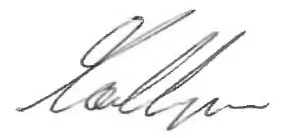
Mark Loftus
Group Chief Executive Officer
Reviewed October 2025